

In our last conversation, we discussed that although large language models are immensely powerful, they remain lacking because they require context. They can map relations between words, but they end up relying on us to provide the world behind the word.
But once the problem of context comes into view, a deeper problem follows closely behind it. Someone still has to decide which context matters, what kind of answer is being asked for, and when a polished response should be trusted, doubted, or ignored altogether.
The next skill the age of AI is demanding from us is not better prompting but better judgment.
Large language models mark a strange turn in the history of technology. For decades, our tools mainly amplified effort. A calculator sped up arithmetic. A search engine sped up retrieval. A spreadsheet sped up analysis. But large language models do something more intimate. They sit inside the act of thought itself. They help draft, interpret, summarize, advise, compare, reframe, explore, and answer.
They do not merely extend the hand; they increasingly extend the mind. And every extension of the mind raises a question that is simultaneously practical and philosophical:
When does assistance become substitution?
The Oracle Problem
Mohak: What worries me is not simply that these models are getting more capable. It is that reliance on them is becoming habitual. There are tasks I once would have worked through myself that I now delegate almost automatically. And once that habit forms, it does not stay confined to trivial things. It begins with grunt work, with summarization, with drafting, and with small conveniences. But it slowly moves inward, toward reasoning itself.
I recently heard about a very bright student who kept pausing in the middle of a conversation, and when someone asked him why, he said, “I’m processing; I’m not used to thinking without ChatGPT.” Intelligence had not disappeared, but the habit of independent thinking had changed. That is what feels significant. If a muscle is used less and less, we know what happens to it.
The emerging skill here may be surprisingly basic: discretion—knowing when to use the model and when not to. If you delegate too much thinking, eventually that muscle atrophies.
AAD: There are certain activities where this becomes immediately obvious. Many people can feel, almost instinctively, that there are domains in which outsourcing to AI is somehow inappropriate, even if the output may appear passable. Personal interactions are one example. A birthday message, an apology, a word of encouragement, an expression of love—these can all be generated, but something essential is lost.
The same is true of learning. Learning is not an event in which information arrives; it is a process that transforms the learner. It is not something that can be performed on our behalf any more than exercise can be.

This chasm between information and transformation is not modern. The Kaṭha Upanishad, a seminal Hindu scripture, presents a dialogue between an inquisitive young child named Naciketā and the god of death, Yama, himself. At one point in their exchange, Yama reveals:
नायमात्मा प्रवचनेन लभ्यो न मेधया न बहुना श्रुतेन ॥ 2.24 ॥
nāyamātmā pravacanena labhyo na medhayā na bahunā śrutena ।
This Paramātmā (God) is not attainable by [mere] discourse (pravacana), not by [one’s] intellect, [and] not by greatly listening to scripture.
The mantra speaks directly to the “Oracle Problem.” AI models possess unparalleled “pravacana” (the ability to generate fluent, articulate speech) and can provide access to unthinkably large repositories of “heard” or accumulated knowledge (“bahu śruta”). However, spiritual truths and, perhaps more broadly, deep human wisdom are not attained merely by assembling the right words or accessing endless data. Wisdom requires an inner life to be transformed and capable of receiving grace.
That is the first paradox of this new era. We are turning to AI because it helps us do more, but in some of the most important parts of life, the doing is itself the formation. To bypass the act is to bypass what the act was supposed to cultivate.
A model may save us time, but time saved is not always a life improved.
Facts, Values, and the Suspended Mind
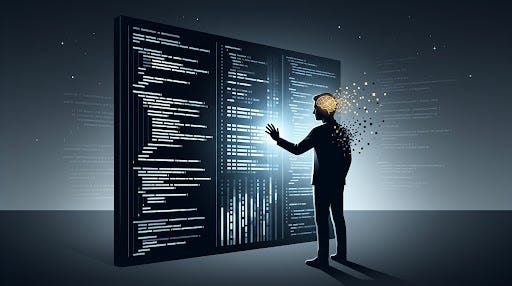
Mohak: The danger becomes sharper because these models are so spectacularly capable when they are right. Ask a frontier model about medicine, law, engineering, literature, social science, history, or physics, and it can respond with a breadth no human being could match. We have never encountered something that appears to know so much across so many domains at once. So we begin to treat it like the smartest being in history. But that is exactly where the problem begins, because it is not an oracle. It has access to an immense amount of knowledge, but it is not always truthful.
You can see this clearly when you ask different models the same question and receive radically different answers. The differences are not trivial. They emerge from pretraining data, from fine-tuning, from alignment choices, from moderation layers, from all the human values that get injected into the system. Ask a moral question across three frontier models, and you may get three distinct moral postures. That alone is sobering. If truth were simply sitting there in the weights, it should not fracture so easily.
A silly example makes the point well. People were asking models whether they should drive or walk fifty meters to a car wash. Several of them replied: you should definitely walk; it is healthy, it saves gas, it is better for the environment. A polished answer, well-intentioned, entirely idiotic. Of course you need the car at the car wash!
The mistake is funny only because the example is harmless. But the same pattern appears when people ask for relationship advice, spiritual advice, medical guidance, ethical counsel, or help making decisions at work. The model can be dazzling across ten domains and still miss the obvious human fact that governs the crucial eleventh. That is why the real risk is not that the model makes mistakes. Humans make mistakes too.
The real risk is that we stop investigating, we stop asking questions. The model pushes the button, and I act.
I am no longer the controller; I am the one under control.
AAD: There is a helpful distinction here between facts and judgment. Facts answer questions about what is the case. Judgment wrestles with what ought to be done. The former is often within the reach of data. The latter never belongs to data alone.
Once a question becomes moral, relational, or existential, there is always more at stake than information retrieval. Context broadens beyond a prompt into layers of life: family, culture, faith, memory, temperament, responsibility, and consequence. And even if all of that could somehow be specified perfectly, morality would still not be exhausted by the specification. Morality requires valuation, prioritization, interpretation, and sometimes sacrifice. It requires a being who must live with the result.
There is also something deeply human that complicates this further: we are already prone to suspended disbelief. Read a Wikipedia page about a topic you do not know well, and it often feels authoritative. Read a page in your own area of expertise, and you can immediately see its thinness, omissions, and distortions. And yet, the strange thing is that as soon as we move to the next unfamiliar page, we revert to trust.
The mind wants to believe what is stated fluently. This is why misinformation spreads so easily. The act of stating something creates an aura of possible truth. AI does not create that weakness in us; it exploits it magnificently. Fluency becomes authority. Confidence becomes credibility.
The danger is not just hallucination. It is our readiness to mistake coherence for wisdom.
The machine’s greatest trick, then, is not that it can be wrong. It is that it can be wrong in complete sentences.
The Taste for Judgment
Mohak: One sees this even in something as mundane as social media. On X, people constantly invoke Grok as though the oracle has spoken: “Grok, is this video real?” “Grok, did this really happen?” “Grok, explain this news story.” But read the different threads closely, and the same system will give contradictory answers across different prompts. If I read only one confident reply, I may walk away convinced of its credibility. If I read several, I discover something else: schizophrenia.
The models may have knowledge. Humans must own taste.
AI can generate candidate answers, but it cannot inherit responsibility for them. That remains ours.
This is why I keep returning to the language of taste. A lot of people in the world of AI are now talking about taste, but what they often mean is aesthetic sensibility or product instinct. I think the word goes deeper.
Taste, in this moment, really means discernment.
It is the ability to tell what fits, what does not, what is proportionate, what is excessive, what is true enough to act on, what is plausible but dangerous, what needs another layer of scrutiny.
AAD: Taste is precisely the sort of thing that resists reduction to explicit rules. That is why it has traditionally been transmitted through apprenticeship rather than mere instruction.
A craftsperson can describe the steps of the work, but not fully the feel of it. A writer can explain grammar and structure, but not fully why one sentence is alive and another merely correct. There is an old example from agricultural practice: experienced workers sorting newly hatched chicks into male and female can become astonishingly accurate, even when they cannot articulate exactly how they know. A student stands beside them for months, watching, repeating, failing, and somehow the faculty transfers. Not because a hidden rulebook is finally disclosed, but because the student’s perception has formed. They literally come to see.
And it reveals something crucial for the present moment: technical skill can often be learned from books, software, and repetition. Taste is learned from persons, and not just ordinary persons, but experts. It is apprenticed. It is handed over through correction, imitation, and proximity to someone who already knows what good looks like.
The age of abundant answers does not make taste obsolete. It makes it scarce.
The Guru Principle
Mohak: Once you see that, the need for teachers becomes almost embarrassingly obvious. When my daughter uses AI tools to build a computer game, the model can generate the code and it can help her debug. But every so often, I have to step in. Not to do the coding for her, but because I know what a good game feels like. I know that pacing and flow matter, and that tension needs relief. She does not yet know what excellence looks like. The teacher’s role is not merely to provide an answer, but to offer a standard for taste.
For years after I taught myself to ski, I could get down the mountain just fine. Then I finally took a lesson, and had to unlearn almost everything. I had accumulated bad functional habits. I had not built the kind of technique that would protect me on truly difficult slopes. Good teaching does not merely help you perform under favorable conditions, but it prepares you for the moment when conditions deteriorate.
In a world increasingly mediated by AI, that feels like an exact analogy for judgment.
This is why one of the most important things people can do in this moment is seek out teachers. Of course that includes spiritual teachers, but it also includes mentors, elders, craft masters, serious thinkers, people with lived experience, and people whose judgment has been tested by reality and, most importantly, is genuine and well-meaning.

In our spiritual vocabulary, there is satsaṅg: association with truth. It means finding someone who sharpens your clarity. Someone who adds nuance. Someone who has experience where you do not. Someone who awakens your deeper judgment.
सत्यस्य स्वात्मनः सङ्गः सत्यस्य परमात्मनः ।
सत्यस्य च गुरोः सङ्गः सच्छास्त्राणां तथैव च ॥
satyasya svātmanaḥ saṅgaḥ satyasya paramātmanaḥ।
satyasya ca guroḥ saṅgaḥ sacchāstrāṇāṃ tathaiva ca॥
One should know that the true meaning of satsaṅg is to associate with the ātmā, which is true; to associate with Paramātmā, who is true; to associate with the guru, who is true; and to associate with true scriptures. One who practices this divine satsaṅg becomes blissful.
We have spent years imagining education as the transmission of technical skill. But technical skill is becoming cheap. The model can help you code, outline, summarize, translate, and imitate. What it cannot do is teach you what good work is, what good character is, what good judgment feels like from the inside.
You do not go to a teacher merely to learn the craft. You go to learn what good looks like.
AAD: The guru-disciple tradition rests on this insight. The teacher is someone through whom discernment becomes livable. Different teachers serve different functions. Parents teach manners, affection, language, and the earliest habits of perception. A mathematician teaches proof. A musician teaches tone. A spiritual teacher teaches how to order life itself. Each gives access to a different domain of wisdom.
But beneath those differences is a common principle: information alone is never enough. The student must be guided into a way of seeing.
That guidance includes several things at once. In addition to showing what the end looks like, a teacher also prevents certain avoidable errors. This intervention does not reduce wisdom to rules; it prevents wasting years on repeated mistakes. The teacher also asks the right question at the right time, which is sometimes more important than answering the wrong question brilliantly. And perhaps most importantly, the teacher knows that the path of learning is not always linear. The student may want information or a skill, but the guru gifts something entirely unexpected, all the while shaping perception, perspective, and purpose.
This is why the guru does not become less relevant in a technological age; they become more relevant. When a thousand answers are available at once, the ability to know which one deserves consideration and action becomes precious.
The teacher’s role is not diminished by abundance. It is intensified by it.
The Return of the Teacher
If the first stage of the AI era taught us to marvel at machine capability, the next stage may teach us to value human formation more seriously than we have in a long time. Context engineering showed that the machine needs help inhabiting our world. Discretion shows that we need help inhabiting a world increasingly shaped by machines.
As AI makes technical skills more available, judgment becomes crucial. As answers become cheaper, discernment becomes paramount.
The future, then, may not belong simply to those who can use the tools most aggressively. It may belong to those who know when not to be impressed by them; those who can distinguish fluency from understanding, possibility from wisdom, help from surrender.
And because that faculty is not downloaded but formed, the age of AI may end up rediscovering something much older than AI itself: apprenticeship, the teacher, the guru, satsaṅg.
The smarter our machines become, the more important our teachers become.
Questions to Carry
In our daily use of AI, where have we stopped thinking and started accepting?
If judgment is our responsibility, what are we doing to train it?
Who shapes our judgment—our sense of what good looks like?